The hours after an outage are the worst possible time to ask people to write a document. The service is back, everyone is exhausted, and the backlog that was paused during the incident is now louder than ever. It is tempting to declare victory, close the incident channel, and move on. Teams that do this reliably experience the same outage again a few months later, usually with a different trigger and an identical failure path.
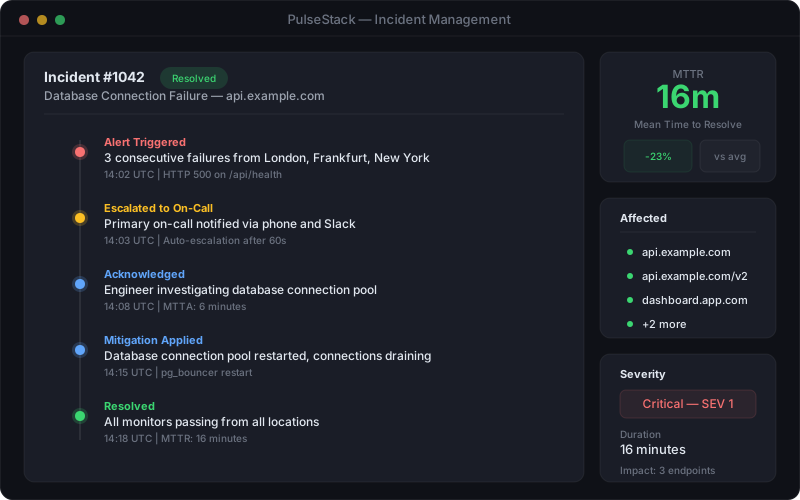
A post-incident review, also called a post-mortem or an incident retrospective, is the mechanism that converts a bad afternoon into permanent organisational knowledge. It is the only part of the incident lifecycle where you get to think slowly. Detection, triage, and recovery all happen under pressure, with partial information and a clock running. The review is where you finally get to see the whole system, work out what actually happened, and change something so the next occurrence is smaller, shorter, or prevented entirely.
The payoff is measurable. Reviews shorten future recovery times because the fixes they generate remove ambiguity from the next incident: better alerts, clearer runbooks, faster rollbacks. They spread hard-won context beyond the two or three engineers who happened to be on call. And done consistently, they build the kind of engineering culture where people report near misses instead of hiding them. This guide gives you a process and a template you can use directly, and it builds on the response workflow covered in our incident management guide.